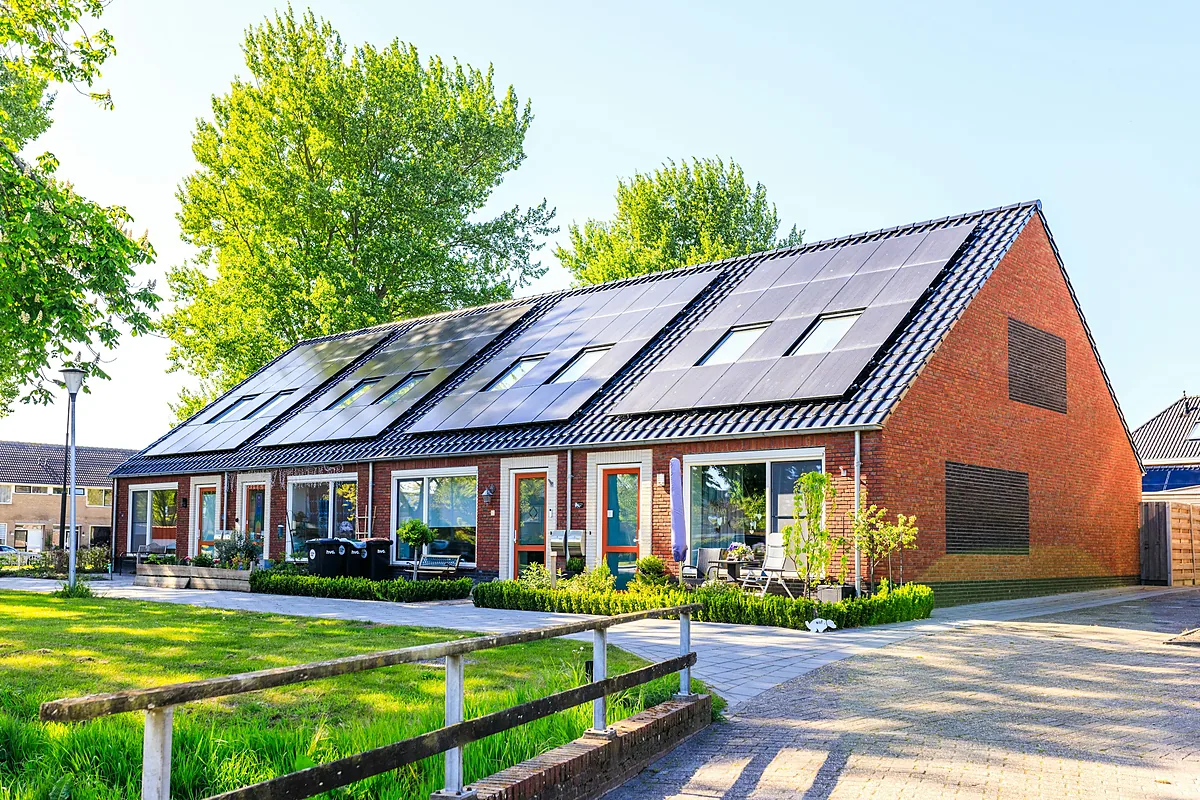
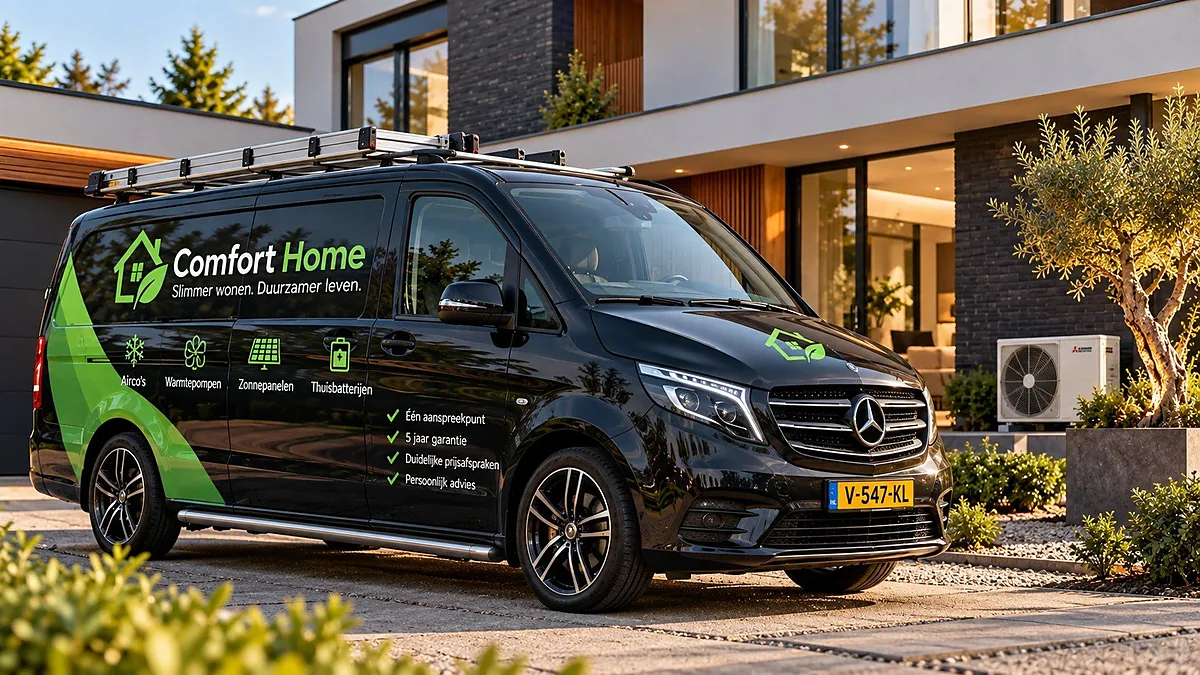
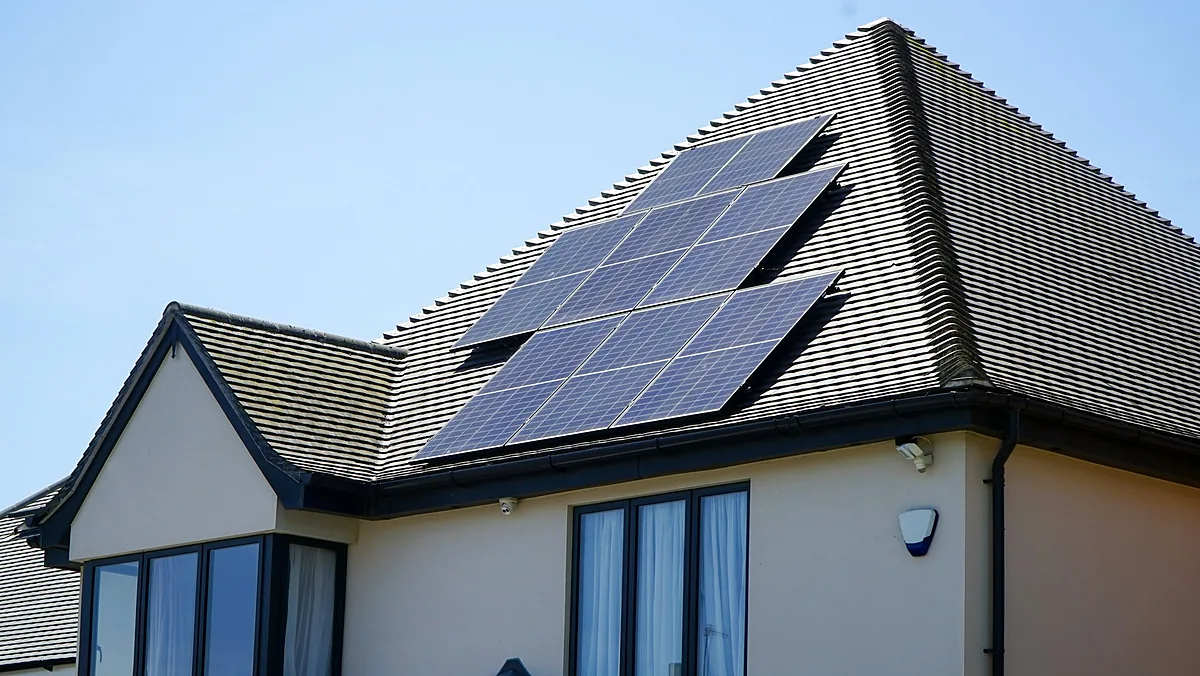
From pitched to flat roof: we bring usage, roof type and future plans together in one clear solar plan. Not a standard package, but a system that fits what you actually use.
Enter your postcode and house number. We look up the year of construction and floor area and show right away what you save per month, with a price indication. Free and no account needed.
Based on your own home
Price indication included
Quote in one click
EXAMPLE · AVERAGE HOMEWith solar panels you are expected to save€ 18 – 26 per month
Indication
Enter your address for the figures of your own home. Tap a solution for a quote.
Solar panels by Comfort Home
Put your roof to work. Smart, neat and worry-free.
Anyone can lay solar panels. Designing a system that delivers the maximum for years is craftsmanship. We calculate your roof and usage, choose panels and an inverter that match, and make sure the installation looks as good as it works.
Thinking of a heat pump, EV charger or home battery in the future? Then we take that into account now. That way you invest well, once.
Maximum yield
Layout based on orientation, shade and roof surfaces.
The right inverter
Matched to your roof and ready for a home battery.
Neat installation
Tidy cable routes and a neat finish.
Warranty through us
One point of contact, even years after installation.
From roof to energy plan
Don’t start with the number of panels. Start with your situation.
We look at roof surface, orientation, shade, annual usage and future consumers such as a heat pump, EV charger or home battery.
⌁
Pitched roof
Layout based on available surfaces, orientation, obstacles and a tidy cable route.
What we need for targeted advice
Make a layout plan for the roof Note the orientation, pitch, age of the roofing and shade from trees, chimneys or dormers. With a flat roof you also want to know how load capacity, ballast and clear zones are assessed.
Calculate with the time of generation Ask for an expected monthly or hourly breakdown and compare it with your daytime usage. A household with an EV charger or heat pump has a different profile than a home that mainly uses power in the evening.
Ask for a quote with system details Compare the total capacity in Wp, the expected annual yield with assumptions, inverter type, monitoring, cable route and changes to the fuse box.
Ask for a layout with shade, orientation and free roof space. Besides annual yield, compare how much solar power you use directly. The Dutch net-metering scheme (salderen) ends on 1 January 2027. Base a proposal for after that on your usage profile and your contract’s feed-in terms.
Frequently asked questions
Clear before we start
How many solar panels do I need?
That depends on annual usage, panel capacity, roof orientation and shade. The quick scan gives a first direction; the final number follows from the layout plan.
Can you do both pitched and flat roofs?
Yes. The mounting method differs: on a pitched roof we use a suitable roof system, on a flat roof a ballast and layout plan.
Can I add a home battery later?
Often yes. If that is a future wish, we take compatibility and inverter choice into account straight away.
Are postcode and house number enough for a quote?
It helps for a first roof check. For a final proposal, additional photos or a technical survey may be needed.
What changes when net metering ends?
The net-metering scheme ends on 1 January 2027. After that it becomes more important to use your own power yourself. A well-matched system, smart usage and possibly a home battery help. We include this in our advice.
Which inverter is best?
That depends on your roof and plans. With shade or several roof surfaces, optimisers or micro-inverters can be smart. Want a home battery later? Then a hybrid inverter can be handy.
Do solar panels need maintenance?
Little. Rain usually keeps the panels clean enough. Monitoring shows whether everything works properly, and if there is a fault we help you.
Choosing solar panels after net metering ends
From 2027, self-consumed solar power becomes even more important. A good proposal therefore doesn’t just aim for as many panels as possible.
Orientation, shade and roof area help determine the yield.
Spread expected production and own usage over the day.
Compare inverter, warranties and options for expansion.
Check your energy supplier’s feed-in tariff and any feed-in costs.
You receive a proposal based on your situation. The final price, options and terms are confirmed in the quote.
Solar panels after 2027: what changes for you?
From 1 January 2027 the net-metering scheme ends. Power you feed back can then no longer be offset annually against power you buy. You still receive a feed-in payment, but rates and possible feed-in costs differ per contract. That is why we look not only at the number of panels, but above all at your usage, roof and how much solar power you can use yourself.
We go through this with you
What does your household use during the day and evening?
How are the roof and shaded areas positioned?
What are the feed-in payment and costs in your contract?
More information about solar panels
Solar panels for pitched and flat roofs
Comfort Home designs solar systems based on the roof and the energy profile. We look at annual usage, orientation, shade, inverter and future electrification. The result is an installation that fits the home, not just a standard package.
Combining solar panels with a home battery or heat pump
If you expect a heat pump, electric car or home battery later, you benefit from a system prepared for it. We include those plans in the sizing and technical choices.
Solar panels after net metering: look at when you use power
From 1 January 2027 the annual offsetting ends. The difference between the price of purchased power, the feed-in payment and any feed-in costs helps determine the value of your solar power. Solar power used directly avoids buying power at that moment.
How do I compare south with east-west?
Ask for the expected generation per part of the day. A household that mainly uses power in the morning and late afternoon may choose a different layout than one with an electric car charging around midday.
What can I adjust first?
Schedule the dishwasher, washing machine or charging more often during hours with your own generation if that suits your household. Then compare your meter data over several weeks with the old situation.
What belongs in a complete layout plan?
Roof surfaces, orientation, shade, inverter location, cable route and meter cupboard. Ask for a second scenario if a heat pump, EV charger or battery is in your plans.